
Best HR Software for Hospitality: Rotating Shifts & Tip Management

 Built with HR and software expert input using a structured evaluation process
- Use case: Managing complex 24/7 scheduling patterns alongside compliant, multi-variable tip distribution.
- Outcome: Eliminate manual tip calculations, ensure labor compliance, and automate payroll for shift-based hospitality workers.
Executive Summary
The intersection of rotating shift management and complex tip distribution creates a high-risk compliance environment for hospitality businesses. Generic HR platforms routinely fail to handle the specific nuances of split shifts, tip credits, and 24/7 roster patterns like DuPont or 4-3 schedules.
For this scenario, the key choice is usually: All-in-one hospitality platforms that natively integrate point-of-sale (POS) data to automate tip pooling and payroll directly. Workforce management (WFM) specialists that offer superior roster management for complex rotating patterns but rely on integrations for payroll or advanced tip logic. Your decision hinges on whether your operational complexity lies more in 24/7 shift coverage (like a hotel) or in granular, multi-role tip distribution (like a fine-dining restaurant).
Our Top Picks for Payroll for Hospitality and Tip Management
- 1
- 2
- 3
- 4
- 5
Who This Guide Is For
This guide is built for hospitality operations and HR leaders managing shift-based workforces.
- Hotel and resort operators managing 24/7 coverage and complex rotating shift patterns.
- Restaurant and bar general managers spending hours manually calculating tip pools and tip credits.
- Hospitality finance leaders needing to ensure FLSA, fair workweek, and tax compliance across multiple locations.
- Multi-concept hospitality groups requiring scalable labor cost forecasting tied to real-time sales.
What "Good" Looks Like
Strong vendor fit in this category requires moving beyond basic time and attendance.
- Pattern-based scheduling — The ability to build and automate complex rotations (e.g., 4-days-on/4-off) rather than just relying on open availability.
- Automated tip pooling — Native tools or deep integrations that calculate tips based on custom rules (points, hours worked, percentages) without manual spreadsheet work.
- POS integration — Real-time syncing with point-of-sale systems to map labor costs against live sales and foot traffic.
- Compliance guardrails — Automated alerts for overtime risks, break enforcement, fair workweek predictive scheduling, and tip credit minimums.
- Blended rate payroll — Systems that accurately pay staff working multiple roles at different pay rates within the same pay period.
Our Top Recommendations
Workforce.com (Fit Score: 0.95)

Workforce.com
(Fit Score: 0.95)Built for hotels, large venues, and complex 24/7 shift patterns
What stands out:
- Advanced 'Schedule Patterns' and templates support complex rotations like 4-days-on/4-off, Pitman, and DuPont schedules [01]
- AI forecasting predicts labor demand based on historical data and foot traffic
- Built-in payroll handles blended overtime rates, retro-pay adjustments, and multiple pay rates
- Integrates natively with TiPJAR to support fair, compliant tip distribution including UK Allocation of Tips Act compliance [02]
Why We Recommend
- –It is a specialized workforce management platform built specifically for shift-based industries
- –Its architecture is designed around 'shift patterns' rather than just open availability
- –It is the strongest fit for 24/7 hotel operations
- –The system reflects tip distribution accurately within the native payroll module [02]
Fit Consideration
- –Setup and configuration can be complex for smaller teams
- –Pricing requires a custom quote, which may deter businesses looking for transparent, off-the-shelf pricing
Pricing benchmark:

7shifts (Fit Score: 0.92)

7shifts
(Fit Score: 0.92)Best for restaurants, bars, and multi-location food and beverage
What stands out:
- Dedicated Tip Management add-on automates calculations based on custom rules and syncs with POS data
- 7shifts Payroll automatically handles tip credits, multi-state tax filing, and tip compliance [03]
- Scheduling templates allow managers to create blueprints for 24/7 rotating rosters like 5-2 and 4-3 patterns
Why We Recommend
- –It is a restaurant-first platform that leads the market in automated tip pooling
- –The user-friendly interface makes variable scheduling highly accessible for managers
- –It offers restaurant-specific compliance features natively
Fit Consideration
- –Total costs can escalate quickly for small businesses when all necessary add-ons are included
- –Rotating shift capabilities are slightly less robust for complex hotel environments compared to dedicated WFM specialists

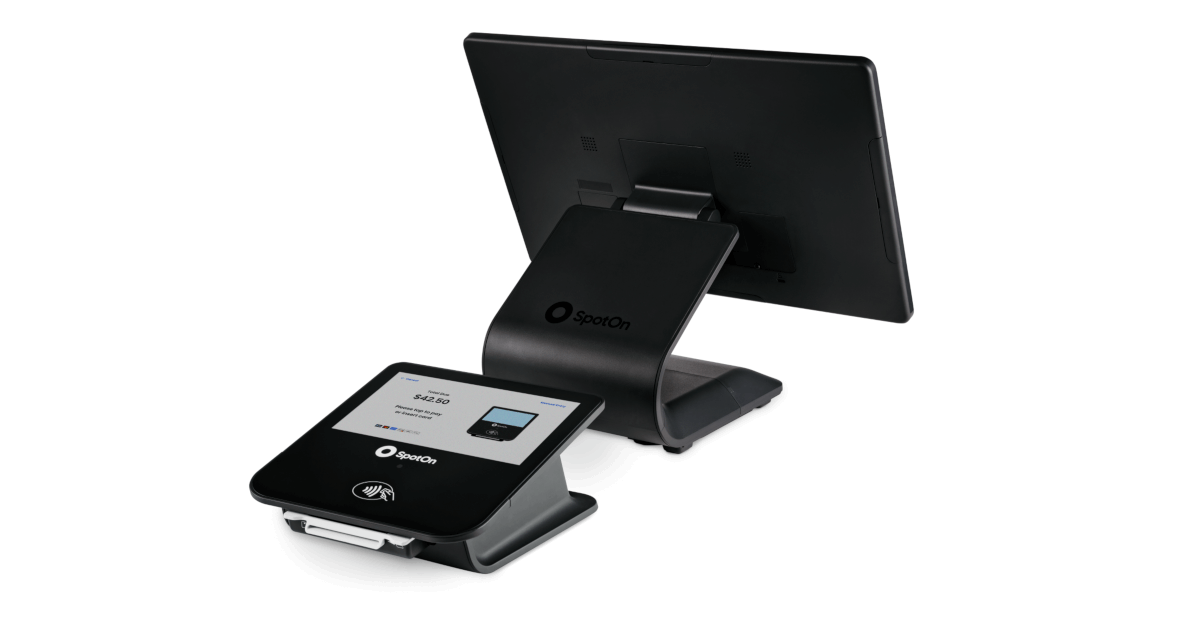
SpotOn (Fit Score: 0.88)

SpotOn
(Fit Score: 0.88)Tailored to fine dining and venues with highly complex tip rules
What stands out:
- Supports highly flexible tip logic, including points-based weighting and custom 'waterfalls'
- The 'Labor Center' provides deep operational analytics by layering scheduling and real-time sales
- Integrates with over 20 payroll providers including ADP, Paychex, and Gusto [04]
Why We Recommend
- –It is a powerhouse for labor management that handles the complex math that breaks other systems
- –It provides the most granular control over tip distribution rules on the market
- –It layers scheduling, time punches, and real-time sales for deep operational analytics
Fit Consideration
- –It is often best utilized within the broader SpotOn POS ecosystem
- –Coverage is primarily focused on the US market

Push Operations (Fit Score: 0.85)

Push Operations
(Fit Score: 0.85)Best for businesses seeking an all-in-one HR and payroll system
What stands out:
- Integrated payroll processes tips, statutory holiday pay, and overtime natively
- Supports multi-EIN setups for complex restaurant group structures
- Automates schedule generation based on forecasted sales and custom rules
Why We Recommend
- –It is designed to unify HR, payroll, and scheduling specifically for the hospitality sector
- –It simplifies the technology stack by eliminating the need for separate applications
- –Highly effective for restaurant groups requiring multi-EIN setups
Fit Consideration
- –Scheduling features are less advanced than those found in dedicated WFM tools like Deputy or Workforce.com
- –Some users note occasional interface glitches
Pricing benchmark:

Deputy (Fit Score: 0.82)

Deputy
(Fit Score: 0.82)Tailored to businesses with an existing payroll provider they want to keep
What stands out:
- Excellent support for rotating rosters and 24/7 coverage templates
- Uses AI to auto-fill shifts based on staff availability and labor costs
- Robust compliance engine for break planning, fair workweek, and overtime calculations
Why We Recommend
- –It is a market leader in pure-play scheduling and time tracking known for flexibility
- –It offers an extensive integration ecosystem to build a custom tech stack
- –Strong global compliance library for international jurisdictions
Fit Consideration
- –Does not have native advanced tip pooling logic; requires integration with TipHaus
- –It is not a payroll provider and relies on integrations to export hours and tips
Pricing benchmark:

Comparison Matrix
| Vendor | Best for | Rotating Shift Support | Tip Management | Payroll Capability | Primary strength |
|---|---|---|---|---|---|
 | Hotels, Large Venues | Excellent (Pattern templates, AI forecasting) | Native + Integration (TiPJAR) | Native (Built for hourly/shift work) | Best-in-class rotating shift patterns |
 | Restaurants, Bars, Cafes | Good (Templates, 24/7 patterns) | Excellent (Native Tip Pooling Add-on) | Native (Restaurant-specific add-on) | Market-leading automated tip pooling |
 | Fine Dining, Complex Tip Pools | Very Good (Labor Center analytics) | Excellent (Points-based, Custom Rules) | Native & Integrated (20+ partners) | Unmatched flexibility for complex tip distribution |
 | All-in-One Hospitality | Good (Auto-gen based on rules) | Good (Automated calculations) | Native (Integrated HR/Payroll) | Unified HR, Payroll, and Scheduling |
 | Flexible integrations | Excellent (AI auto-fill, complex patterns) | Integration Required (TipHaus) | Integration Only (ADP, Gusto, etc.) | Powerful scheduling and compliance features |
How to Choose: A Simple Decision Framework
Choose Workforce.com if…
- You operate a hotel or 24/7 venue with complex, repeating shift patterns (like DuPont).
- You need native payroll built specifically for hourly workers with blended rates.
Choose 7shifts if…
- You run a restaurant or bar and want an intuitive, drag-and-drop interface.
- You need automated tip pooling that syncs directly with your POS.
Choose SpotOn Teamwork if…
- Your venue uses highly complex tip distribution rules, like points-based weighting or custom waterfalls.
- You want deep labor analytics tied to real-time sales.
Choose Push Operations if…
- You want a single, unified system for HR, payroll, and scheduling.
- You manage a restaurant group with a multi-EIN setup.
Choose Deputy if…
- You already have a payroll provider (like ADP or Gusto) that you want to keep.
- You need best-in-class scheduling and are willing to integrate a third-party app for tip management.
Regional Insight
North America: The market is heavily focused on software to manage FLSA tip credit compliance, multi-state tax filing, and fair workweek (predictive scheduling) laws. Vendors like 7shifts, SpotOn Teamwork, and Push Operations are deeply specialized in US and Canadian restaurant labor laws. Global (UK/Australia): Businesses outside North America often face different statutory holiday pay and break enforcement rules. Deputy and Workforce.com offer stronger global compliance libraries tailored to these international jurisdictions. The UK's Employment (Allocation of Tips) Act requires strict tip pooling fairness, supported by tools like TiPJAR.
Pricing: What's "Normal" in the Current Market?
Pricing in the hospitality HR software market is typically structured either on a per-user, per-month basis or a per-location flat fee, with payroll and tip management often sold as separate add-ons. Rule of thumb: Per-user models: Expect to pay upwards of $5 per user per month for core tracking. Per-location models: Base scheduling often starts around $75 per location per month. Add-ons: Dedicated tip pooling modules can cost an additional $50 per location, while native payroll usually requires a base fee (e.g., $40/month) plus a per-employee fee (e.g., $6/PEPM).
Frequently Asked Questions
Methodology
This page is a scenario-specific ranking based on the shared research and the criteria most relevant to this buying situation. We weighted depth of rotating shift support and pattern templates, flexibility and automation of tip pooling and distribution logic, native payroll capabilities for hourly, shift-based workers, and compliance features for hospitality-specific labor laws (e.g., tip credits, fair workweek). Pricing structures vary heavily based on module selection and business size. Integration quality depends on your existing POS and payroll tech stack. This is not legal advice.
How we reviewed this article:
We review this page regularly and update it as vendor capabilities, pricing, regional coverage, and regulatory requirements evolve.
- CL-01. workforce.com — FeaturesChecked 14 Apr 2026
- CL-02. workforce.com — IntegrationsChecked 14 Apr 2026
- CL-03. 7shifts.com — PricingChecked 14 Apr 2026
- CL-04. spoton.com — IntegrationsChecked 14 Apr 2026
- CL-05. pushoperations.com — PricingChecked 3 Sept 2026
- S1-35. Workforce.com Pricing | Canada — vendor_pricing_pageChecked 26 May 2026
- S2-44. Signs You Should Switch Payroll Providers — vendor_pricing_pageChecked 15 Sept 2026
- S3-11. SpotOn Teamwork Scheduling — vendor_product_pageChecked 12 May 2026
- S3-12. SpotOn Teamwork Employee App — vendor_product_pageChecked 12 May 2026
- S3-13. SpotOn POS Review — unknownChecked 12 May 2026
- S5-17. Pricing plans - Deputy Help Center — vendor_help_centerChecked 18 May 2026
Essential terminology for evaluating payroll and HR software for hospitality:
- EOR (Employer of Record) — A third-party organization that legally employs workers on behalf of another business, handling all local payroll, taxes, and compliance.
- Contractor Management / AOR — Systems designed to manage compliance, invoicing, and payments for independent contractors (1099 workers), mitigating misclassification risks.
- Payroll — The financial administration of employee compensation, encompassing wage calculations, tax withholdings, and statutory deductions.
- Owned Entities — Legal business structures established and directly operated by a vendor in a foreign country, eliminating the need for third-party partners.
- Data Residency — Legal and regulatory requirements dictating that data must be stored and processed within the physical borders of a specific country.